Au Naturale: How Natural Pigments Shaped Traditional Indian Art
TL;DR
Traditional Indian art forms like Pattachitra, Madhubani, Gond, and Kalamkari make use of natural pigments from plants, soil, and minerals. Rich, symbolic and long-lasting, these dyes are an excellent way to highlight local ecology. Different art styles use unique processes to create art. Non-toxic and biodegradable, natural dyes support artisan communities and eco-friendly practices. Studio 3 curates authentic artwork featuring these methods; a celebration of Indian heritage with every brushstroke.
Indian culture is rich with traditional art traditions, whether it is Pattachitra scrolls, Gond paintings, Madhubani or delicate Kalamkari art. Each of these styles pay homage to colour and vitality in its most authentic form; sourced from nature and crafted with care. These traditional art forms carry the legacy of a few centuries and the pigments derived from plants, minerals, soil, shells and even cow dung highlight the silent harmony with nature.
Pattachitra: Mythic Palettes from Odhisha
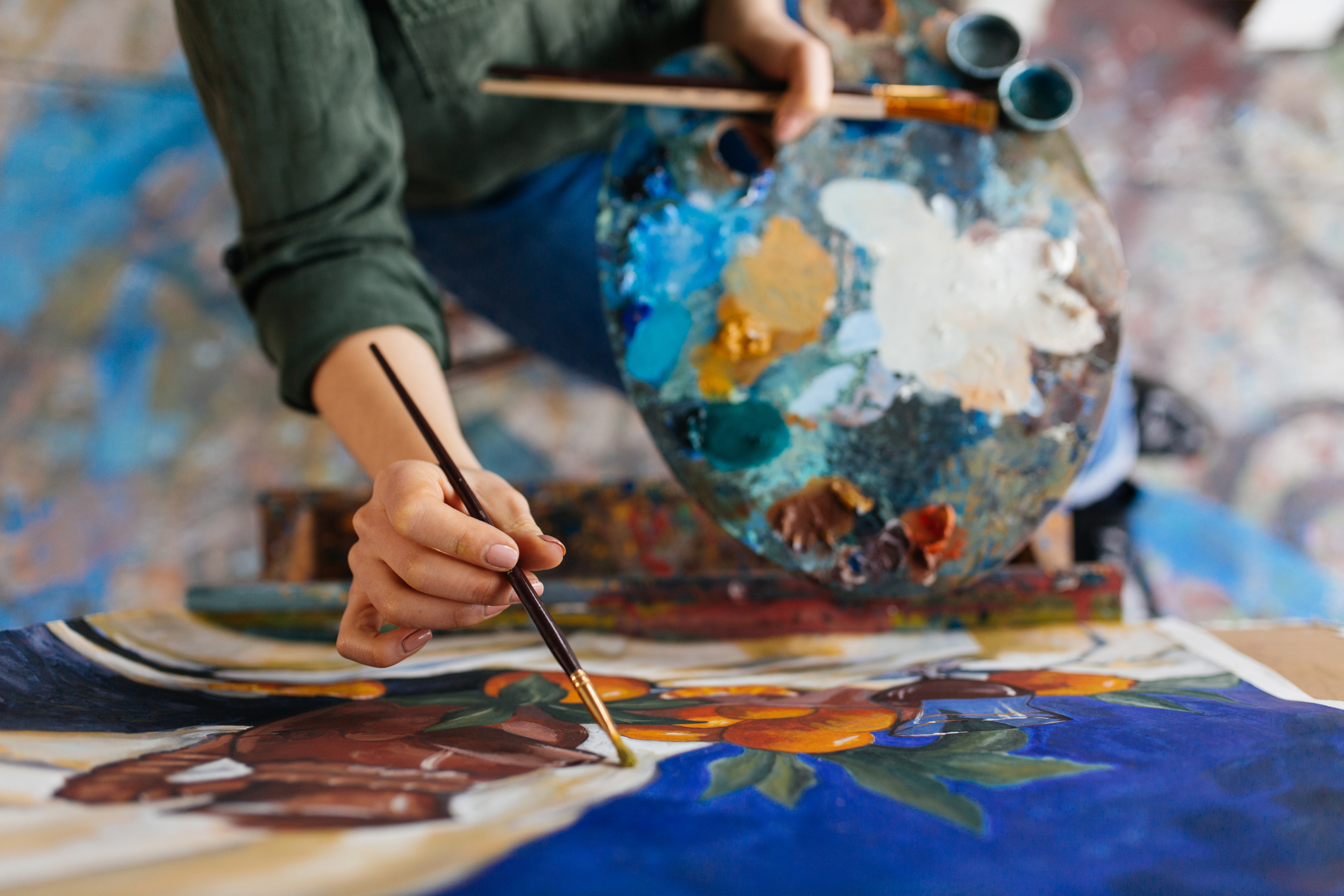
Chitrakars or artists, creating Pattachitra paintings, prepare the canvas using a mixture of chalk and gum, applied evenly over cotton fabric. The pigment for paints is hand-made, minerals and plant-based dyes are painstakingly ground. Five signature colours define Pattachitra art, derived from natural pigments: vermilion red (hingula), yellow (haritala), black (lamp or coconut shell soot), pearl white (conch-shell powder), and earth‑orange (geru). Bold and earthy, these colours bring mythological scenes from Lord Jagannath, Krishna and Gopis to life. A final lacquer coating is applied at the end to give the pigments and the design archival permanence.
Madhubani: The Vibrance of Mithila
Originating in Mithila in Bihar, the first step in creating Madhubani paintings is treating the walls or paper with a natural base of cow dung and mud, to preserve the paint. Next, artists mix pigments from turmeric (yellow), indigo (blue), hibiscus and bougainvillea (red and pink), bean leaves (green), rice powder (white), and charcoal or lampblack (black). Every colour used is symbolic, representing themes of fertility, devotion and luck, which enhances the visual and spiritual appeal of the work.
Gond Art: From Soil to Story
Madhya Pradesh’s tribal heritage is best exemplified through Gond artists. Stories of nature, animals and mythology are brought to life through pigments, local soils and plants. Yellow colour from ram-raj sand, white from chui mitti, red from hibiscus plant, greens from bean leaves or cow dung and rich black from charcoal. The result is a vibrant artwork, decorated with rhythmic patterns that are both symbolic and ecological.
Kalamkari: Natural Alchemy of Textile
Vivid Kalamkari art is textile based, using both plant and mineral extracts to achieve final results. A mixture of buffalo milk and myrobalan (a type of plant) is first used to treat and condition the fabric. Indigo, alizarin (root-based red), iron acetate (for blacks), turmeric and resinous mordants are used to dye the designs. Designs are sketched freehand by master artists using special bamboo pens dipped in jaggery-water. Wax is used for resist dyeing before adding indigo. This gives the rich, layered look to Kalamkari fabric, leaving the artwork looking bright and sharp, with a long-lasting colour that feels alive.
Why are Natural Dyes Important?
Natural dyes are biodegradable, far less toxic and sourced locally, which means they support circular economies in artisan communities. Unlike synthetic colours, by-products like spent plant waste are easily compostable. Moreover, the traditional processing methods for these art styles uses natural sun drying and employs manual labour, a nod towards keeping the entire practise sustainable with low energy requirements.
At Studio 3, we aim to house an eclectic collection of traditional Indian art, supporting artists and communities that keep the rich heritage alive. Browse through our collection <add link> of curated Kalamkari panels and Gond murals created with authentic pigments and techniques. Bring home a piece of India’s cultural heritage.