Celebrating the Divine Feminine: The Many Faces of Goddess Durga in Indian Art
As one of the most fierce and powerful of goddesses in the Hindu pantheon, Goddess Durga or Maa Durga, as she is fondly called, is a symbol of all the qualities associated with the Supreme Being. A representation of infinite power and purity, the goddess is worshipped across India, more so in the Eastern part of India. ‘Durga Puja’ is an important festival in Bengal, Odisha, Bihar, Jharkhand, Tripura and Bangladesh. Devi Mahatmya or Devi Mahatmyam is a Hindu philosophical text that describes the Goddess as the supreme power and the creator of the universe and is recited during the Durga Puja festival in Durga temples all across India.
Many traditional Indian art styles also celebrate the goddess in their own unique ways. These Indian paintings usually show celebrations of her victories over evil while also highlighting the cultural nuances of the region. In this article, we explore how Durga is represented in popular traditional Indian art styles and how each highlights a different aspect of the divine feminine.
Rajasthani Art Miniatures
Rajasthani paintings created between the 16th and 19th centuries depict the goddess in her fierce avatar as Mahishasuramardini. Created as miniatures, these vibrant Indian traditional paintings often show her riding a lion or tiger, holding weapons against Mahishasura, the buffalo demon. The Devi Mahamaya text is the main source of inspiration for these miniatures, detailing her mythological adventures. These Indian paintings are known for their bright colours, detailed designs and richly decorated backdrops. Natural pigments are used to create these paintings on handmade paper and cloth, which further highlight the artistic legacy of the region.
Details in Pahari Paintings
Pahari Art is native to hilly regions of North India and became popular between the 17th and 19th centuries in India. Goddess Durga is depicted in powerful yet serene poses in this style of artwork. The common imagery in this traditional Indian art shows Durga surrounded by divine creatures or in an intimate setup that highlights her maternal qualities. Most Pahari paintings depicting Durga feature images of celebrations of the goddess as well as her nurturing nature as a maternal figure. The Kangra and Basohli schools are famous for their skilful blending of Hindu mythology, folk art, and Persian influences. Bright colours and delicate brushstrokes make these paintings extremely pleasing to the eye. Moreover, the mineral-based colours used to detail the images on paper give the painting a glowing effect that further adds to the divine appeal of the image.
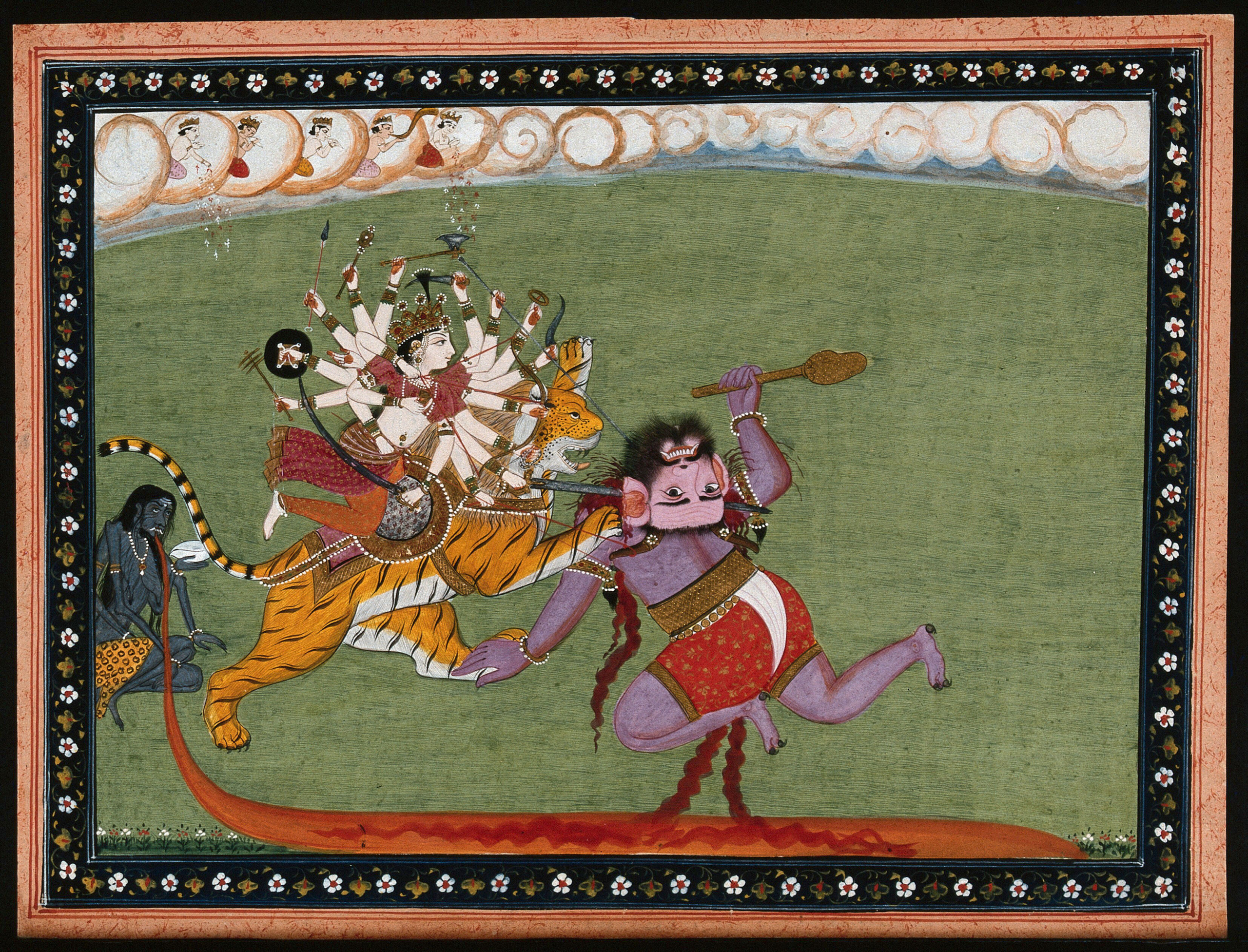
Mahisauramardini; Durga slaying the buffalo demon, Mahishasura. Gouache painting by an Indian painter.
More:
Original public domain image from Wellcome Collection
Traditional Bengal Pattachitra
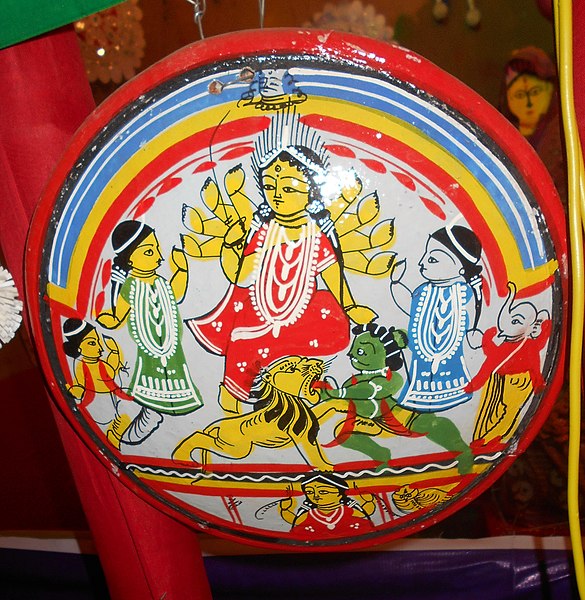
One of the oldest forms of Indian tribal art, Bengal Pattachitra art can be traced back to at least the 13th century – but its roots go as far back as the 1st century AD. Bengal Pattachitra is an oral-visual art form of the Patuas community of West Bengal, who create painting scrolls and narrative songs, the Poter Gan. This art form celebrates the goddess as its central figure and the imagery often has her surrounded by her family during Durga Puja festivities. Most traditionally rendered paintings in this style use natural pigments from plants and minerals to paint on cloth or paper. These scrolls are elaborate works of art and their size varies from three to fifteen feet long and are an important element of festival decorations, adding to the aesthetic appeal and the mysticism of the celebrations.
Art collectors from all over the world are enamoured by the rich history of art from India and the aesthetic appeal of these stories. At Studio3, our art gallery houses a rich collection of artworks by famous Indian artists, featuring many Hindu gods and goddesses to add a touch of divinity and beauty to your living spaces.